03 · Inquiry
Research
Questions I couldn't stop thinking about.

Fourier Analysis and Prediction of Piano and Violin Overtones for use in Music Production
2025 – 2026Hover to readFourier Analysis and Prediction of Piano and Violin Overtones for use in Music Production
Decomposed the A4 (440 Hz) tone of a piano and a violin into their constituent harmonic amplitudes, and used the results to predict the combined overtone spectrum when both instruments are played together, treating the relative phase of each harmonic to determine constructive and destructive superposition. Compared the overtone prediction with audio of the two instruments playing together to determine the accuracy of the prediction model. Discovered further applications in music production, specifically additive synthesis and equalisation of instruments to improve the quality of music when tracks of different instruments are recorded separately.

Dissolved Oxygen (DO) Content in Seawater
2026Hover to readDissolved Oxygen (DO) Content in Seawater
Quantified how the equilibrium solubility of oxygen gas in seawater changes at different salinities via Winkler's Titration. Linearised the data with the Setschenow relation and extracted the salting-out constant along with propagated uncertainties.
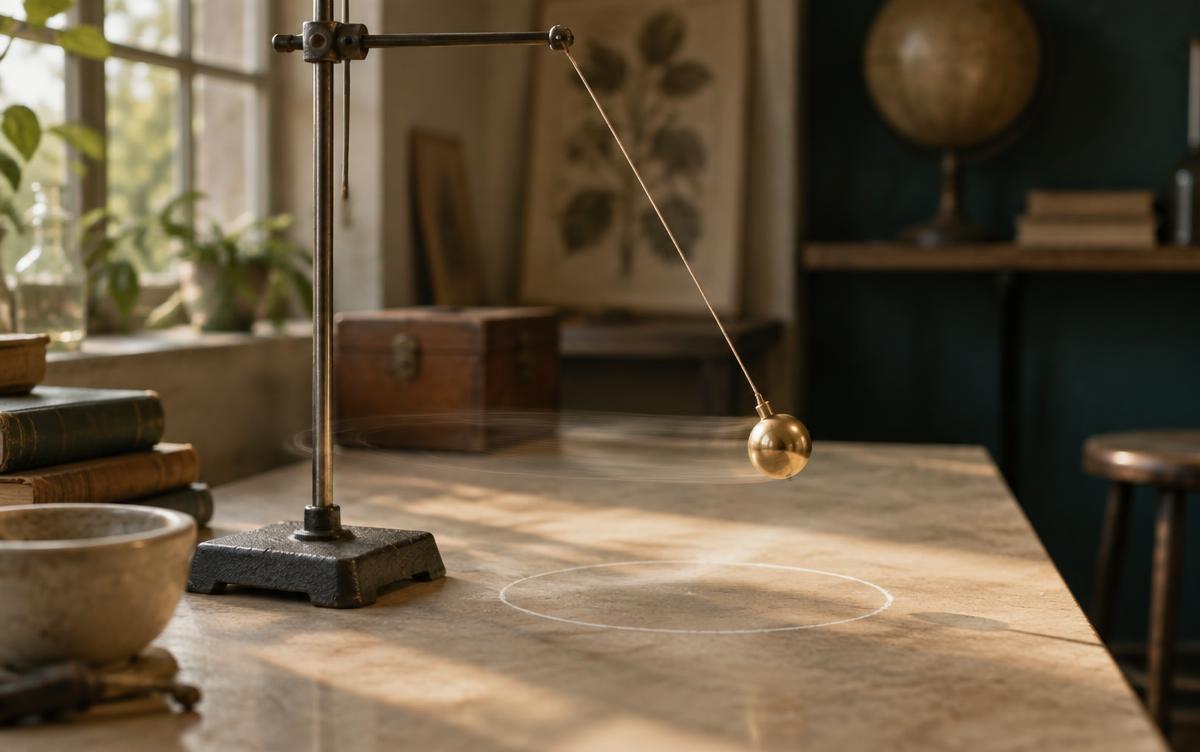
Investigation and Application of a Conical Pendulum
2026Hover to readInvestigation and Application of a Conical Pendulum
Discovered the linear relationship between angular speed and string length in a conical pendulum swinging with circular motion of a constant radius. Findings applied to resonance tuning in pendulum wave-energy harvesters to determine which length corresponds to the time period resonant to natural ocean wave frequency.
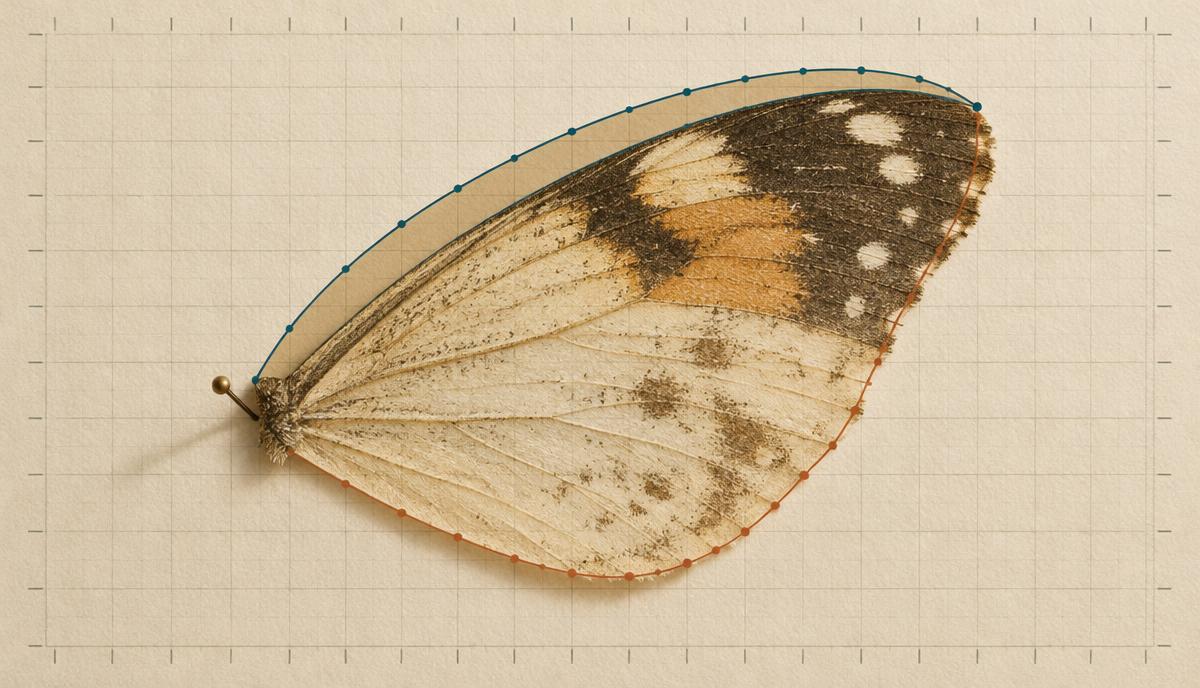
Area of a Butterfly Forewing using Lagrange Interpolating Polynomials
2026Hover to readArea of a Butterfly Forewing using Lagrange Interpolating Polynomials
Modelled the outline of a butterfly forewing using Lagrange interpolating polynomials fitted separately to its upper and lower margins, then integrated between the two curves to find the enclosed area and quantified the uncertainty in that estimate. Connected the calculated area model to the design of a flapping-wing robot, and used the findings to optimise the weight and cost of producing such a device.